Introduction
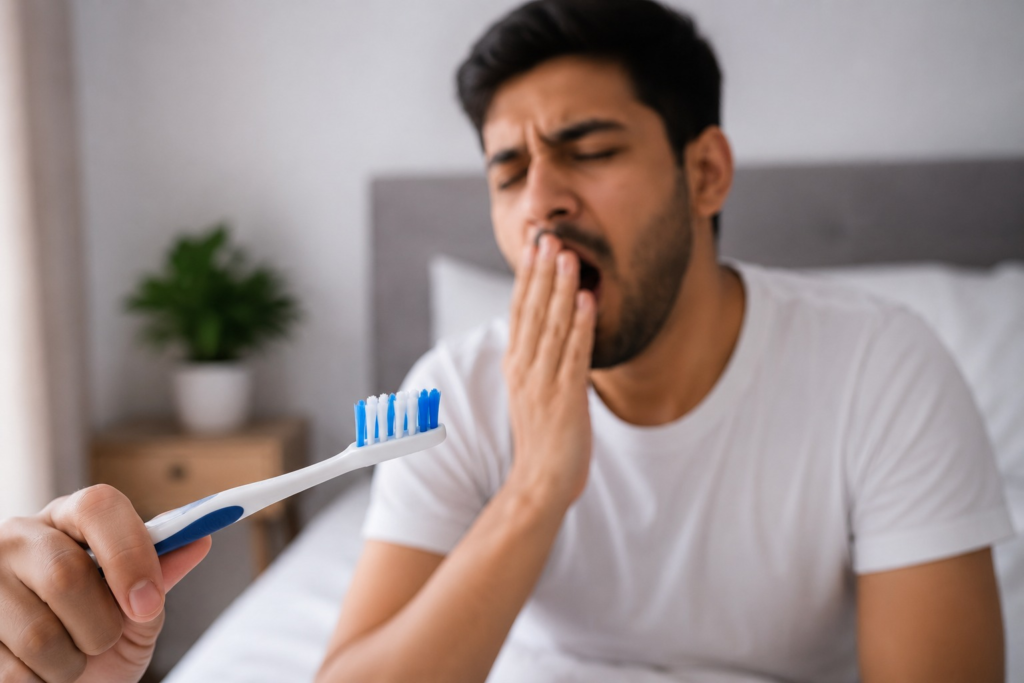
Waking up with bad breath is something that almost everyone experiences from time to time. Many people notice an unpleasant taste or odour in their mouth first thing in the morning, even after brushing their teeth the night before. While morning bad breath is usually temporary, it can sometimes indicate underlying oral health issues that require attention. Understanding why it happens can help you take the right steps to maintain fresher breath and better oral health.
During sleep, your mouth naturally produces less saliva than it does during the day. Saliva plays a vital role in washing away food particles, bacteria, and dead cells from the mouth. When saliva production decreases, bacteria multiply more easily and begin breaking down food debris and dead cells, releasing unpleasant-smelling sulphur compounds. This process is the primary reason why many people wake up with morning bad breath.
Understanding the Science Behind Morning Bad Breath
Morning bad breath, medically known as morning halitosis, develops because the environment inside the mouth changes while you sleep. During the day, saliva continuously cleans the mouth by washing away bacteria, neutralising acids, and helping maintain a healthy balance of microorganisms. However, saliva production naturally slows down during sleep, allowing bacteria to multiply more rapidly.
These bacteria feed on leftover food particles, mucus, and dead cells that remain on the tongue, gums, and teeth. As they break down these materials, they produce volatile sulphur compounds, which are responsible for the unpleasant smell commonly associated with morning breath. This is why the tongue often develops a white coating overnight, as bacteria accumulate on its surface.
While occasional morning bad breath is completely normal, persistent or unusually strong bad breath may indicate an underlying dental or medical problem. Conditions such as gum disease, untreated cavities, dry mouth, poor oral hygiene, smoking, mouth breathing, and certain medications can all increase bacterial growth and worsen halitosis.
Common Causes and Risk Factors
One of the most common causes of morning bad breath is reduced saliva production during sleep. Saliva naturally cleanses the mouth throughout the day, but its flow decreases significantly at night. This creates an environment where bacteria can multiply and produce unpleasant-smelling gases.
Poor oral hygiene is another major risk factor. If plaque, food particles, and bacteria are not removed properly before bedtime, they remain in the mouth overnight and contribute to stronger morning breath. Skipping flossing or failing to clean the tongue can also increase bacterial growth.
Dry mouth, also known as xerostomia, can make morning bad breath worse. Some people naturally produce less saliva, while others experience dry mouth due to certain medications, dehydration, or medical conditions. Mouth breathing and snoring can also dry out the mouth, allowing bacteria to thrive.
Lifestyle habits such as smoking and consuming strong-smelling foods before bedtime may further contribute to unpleasant morning breath. In some cases, persistent bad breath may be associated with gum disease, untreated tooth decay, oral infections, or poorly fitting dental appliances, all of which require professional dental evaluation.
10 Key Signs or Situations to Watch For
- Bad Breath Every Morning Despite Brushing
If you consistently wake up with strong bad breath even after brushing your teeth before bed, it may indicate that bacteria are accumulating in areas that are not being cleaned effectively. This could be due to plaque buildup, tongue coating, gum disease, or other underlying oral health issues. A professional dental examination can help identify the exact cause and recommend the most appropriate treatment. - A White Coating on Your Tongue
If you notice a white or yellowish coating on your tongue when you wake up, it may be a sign of bacteria, dead cells, and food debris that have accumulated overnight. The tongue contains tiny grooves that provide an ideal environment for bacteria to grow, especially when saliva production decreases during sleep. As these bacteria break down proteins and other organic matter, they release sulphur compounds that contribute to unpleasant breath. - Persistent Dry Mouth After Waking Up
Waking up with a dry or sticky mouth is a common sign that reduced saliva production may be contributing to your morning bad breath. Saliva plays an essential role in washing away bacteria and neutralising acids inside the mouth. When the mouth becomes dry, bacteria multiply more easily and produce unpleasant odours. - Bleeding or Swollen Gums
Healthy gums should not bleed during brushing or flossing. If your gums appear swollen, tender, or bleed frequently, the bad breath may be caused by gum disease rather than normal morning bacterial growth. Bacteria trapped beneath the gumline produce toxins that cause inflammation and unpleasant-smelling compounds. - Bad Breath That Lasts Throughout the Day
Morning bad breath normally improves after brushing, eating breakfast, and drinking water. However, if the unpleasant smell continues throughout the day, it may indicate an underlying dental problem such as gum disease, tooth decay, oral infection, or excessive plaque buildup. - Tooth Decay or Food Trapped Between Teeth
Food particles trapped between teeth provide a constant food source for bacteria. Overnight, these bacteria continue breaking down the trapped food, producing unpleasant-smelling gases. Similarly, untreated cavities create spaces where bacteria accumulate and are difficult to clean with regular brushing alone. - Mouth Breathing or Snoring During Sleep
People who breathe through their mouth while sleeping often wake up with stronger morning bad breath than those who breathe through their nose. Mouth breathing dries out the oral tissues, reducing saliva and creating favourable conditions for bacterial growth. - Smoking or Tobacco Use
Smoking significantly increases the risk of bad breath because it dries out the mouth and encourages the growth of odour-producing bacteria. Tobacco also leaves chemical residues inside the mouth that contribute to unpleasant breath while increasing the risk of gum disease and tooth staining. - Skipping Your Night-Time Oral Hygiene Routine
Brushing your teeth before going to bed is one of the most important steps in preventing morning bad breath. Skipping brushing, flossing, or tongue cleaning allows plaque, food particles, and bacteria to remain in the mouth overnight, leading to stronger bacterial activity while you sleep. - Frequent Morning Bad Breath Despite Good Oral Hygiene
If you brush, floss, clean your tongue, stay hydrated, and still experience severe morning bad breath every day, there may be an underlying dental or medical condition contributing to the problem. Chronic gum disease, oral infections, dry mouth disorders, sinus infections, or certain digestive conditions can all affect breath quality.
Frequently Asked Questions
Q: Is morning bad breath normal?
Yes. Mild morning bad breath is completely normal because saliva production decreases while you sleep, allowing bacteria to multiply. However, if the bad breath is severe or continues throughout the day, it may indicate an underlying oral health problem.
Q: Why does my breath smell bad even after brushing at night?
Brushing removes much of the plaque and bacteria from your teeth, but bacteria can still accumulate on the tongue, gums, and between the teeth overnight. Dry mouth during sleep can also contribute to unpleasant breath despite good brushing habits.
Q: Can drinking more water help reduce morning bad breath?
Yes. Staying well hydrated supports healthy saliva production, which naturally cleanses the mouth and helps reduce bacterial growth. Drinking water after waking up can also help wash away bacteria and improve breath freshness.
Q: Should I clean my tongue every day?
Yes. The tongue is one of the main places where bacteria accumulate. Cleaning it daily with a tongue scraper or toothbrush helps reduce bacterial buildup and significantly improves breath freshness.
Conclusion
Morning bad breath is usually a natural result of reduced saliva production and increased bacterial activity during sleep. However, persistent or unusually strong bad breath should not be ignored, as it may indicate underlying problems such as poor oral hygiene, gum disease, tooth decay, dry mouth, or other dental conditions. Understanding the science behind morning bad breath allows you to take simple but effective steps to improve your oral health and maintain fresher breath every day.
At Gravity Dental Polyclinic, we believe that preventive dental care is the foundation of a healthy smile. Our experienced dental team provides comprehensive oral examinations, professional cleanings, and personalised treatment plans to help identify the cause of persistent bad breath and protect your long-term oral health. If you are concerned about ongoing morning bad breath or other dental problems, we are here to help you achieve a healthier, fresher, and more confident smile.
📞 +971 50 591 2922
🌐 https://gravitydentalpolyclinic.ae/contact-us/
About the Clinic
Trusted Dental Care in Al Nahda 2, Dubai, UAE. At Gravity Dental Polyclinic, we are dedicated to providing high-quality dental care for patients of all ages. Our experienced dentists combine advanced technology with a patient-first approach to deliver preventive, restorative, cosmetic, orthodontic, and periodontal treatments in a comfortable and welcoming environment. Whether you need a routine dental check-up, professional cleaning, or specialised dental care, our team is committed to helping you achieve a healthy, confident smile that lasts a lifetime.