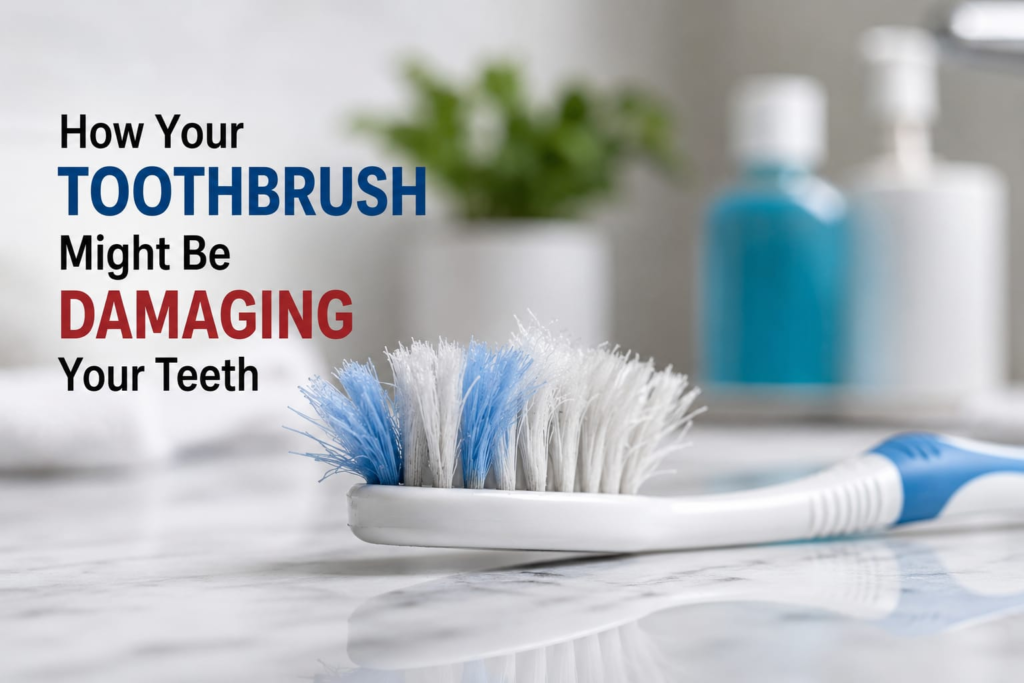
Brushing your teeth is one of the most important habits for maintaining good oral health. Most people believe that brushing harder or more frequently leads to cleaner teeth and healthier gums. While regular brushing is essential for removing plaque and preventing cavities, the way you brush matters just as much as how often you brush. Surprisingly, using the wrong toothbrush or brushing incorrectly can do more harm than good. Over time, these habits may wear down tooth enamel, irritate your gums, increase tooth sensitivity, and even lead to gum recession.
Many patients in Dubai maintain excellent oral hygiene routines but are unaware that everyday brushing habits may be contributing to dental problems. Choosing the wrong toothbrush, applying too much pressure, or using worn-out bristles can slowly damage your teeth without causing immediate pain. Because these changes happen gradually, many people only notice the problem once sensitivity, bleeding gums, or visible enamel wear develops.
Understanding How Your Toothbrush Might Be Damaging Your Teeth
A toothbrush is designed to remove plaque, food particles, and bacteria from the surfaces of your teeth and gums. When used correctly with gentle brushing techniques and a soft-bristled brush, it is one of the most effective tools for preventing tooth decay and gum disease. However, problems arise when brushing becomes too aggressive or when the toothbrush itself is unsuitable for your oral health needs.
Many people mistakenly believe that harder brushing removes more plaque. In reality, plaque is soft and can be removed with gentle brushing. Excessive force places unnecessary pressure on the enamel and gums, gradually wearing away the protective outer layer of the teeth. Since enamel cannot regenerate once it is lost, this damage is permanent.
Another common issue is using toothbrushes with hard bristles. While they may feel more effective, hard bristles can scratch enamel, irritate gum tissue, and increase the risk of gum recession.
Common Causes and Risk Factors
One of the leading causes of toothbrush-related damage is brushing too hard. Applying excessive pressure does not remove additional plaque but instead causes unnecessary wear on tooth enamel and gum tissue. Many people develop this habit without realizing it, especially when trying to achieve a “deep clean.”
Using a hard-bristled toothbrush is another common risk factor. Although these brushes may appear more effective, they can be too abrasive for everyday use. Dentists generally recommend soft-bristled toothbrushes because they clean effectively while protecting the enamel and gums.
Another cause is using an old toothbrush. Over time, toothbrush bristles become frayed and bent, reducing their ability to clean properly. Damaged bristles may also irritate the gums and fail to remove plaque efficiently. Replacing your toothbrush every three months, or sooner if the bristles become worn, helps maintain good oral hygiene.
Incorrect brushing technique can also contribute to dental damage. Scrubbing back and forth with excessive force increases friction against the teeth and gums. Gentle circular movements are far more effective and safer for maintaining oral health.
10 Key Signs or Situations to Watch For
- Tooth Sensitivity: If you experience discomfort when consuming hot, cold, sweet, or acidic foods, worn enamel caused by aggressive brushing may be exposing the underlying dentin. A dental examination can determine whether brushing habits are contributing to your sensitivity.
- Receding Gums : Gums that gradually pull away from the teeth expose sensitive root surfaces and increase the risk of decay. Aggressive brushing is one of the common causes of gum recession.
- Worn Tooth Enamel:Flattened or shiny areas on the teeth may indicate enamel erosion caused by excessive brushing pressure over many years.
- Frequent Bleeding While Brushing: Healthy gums should not bleed regularly. Persistent bleeding may indicate irritation from incorrect brushing techniques or underlying gum disease requiring professional evaluation.
- Frayed Toothbrush Bristles Within Weeks:If your toothbrush bristles become bent or flattened within a few weeks, it usually indicates that you are brushing with too much force. A properly used toothbrush should maintain its shape for several months.
- Grooves Near the Gumline: Small notches or grooves where the teeth meet the gums may develop from years of excessive brushing pressure. These areas can become sensitive and may require restorative treatment.
- Persistent Bad Breath Despite Brushing : Bad breath that continues even after brushing may indicate that plaque is not being removed effectively due to worn bristles or incorrect brushing techniques.
- Choosing Hard-Bristled Toothbrushes : Many people assume that hard bristles clean better. In reality, they increase the risk of enamel wear and gum damage without improving plaque removal.
- Using the Same Toothbrush for Too Long : Old toothbrushes become less effective at cleaning and may harbor bacteria. Replacing your toothbrush every three months supports better oral hygiene and reduces unnecessary wear.
- Pain While Brushing: Brushing should never be painful. If you experience discomfort every time you brush, it could indicate gum recession, enamel loss, tooth sensitivity, or another dental problem that requires professional attention.
Frequently Asked Questions
Q: What type of toothbrush do dentists recommend?
Most dentists recommend using a soft-bristled toothbrush because it effectively removes plaque while being gentle on your teeth and gums. Soft bristles clean the tooth surface without causing unnecessary enamel wear or gum irritation. Whether you choose a manual or electric toothbrush, using the correct brushing technique is more important than applying excessive pressure.
Q: Can brushing too hard damage my teeth permanently?
Yes. Brushing too aggressively over a long period can wear away tooth enamel and contribute to gum recession. Since enamel does not grow back, the damage is permanent. Early intervention and proper brushing habits can prevent further damage and help maintain your oral health.
Q: How often should I replace my toothbrush?
Dentists recommend replacing your toothbrush every three months, or sooner if the bristles become frayed or worn. A damaged toothbrush cleans less effectively and may irritate your gums. If you have recently recovered from an illness, replacing your toothbrush is also a good hygiene practice.
Q: Is an electric toothbrush better than a manual toothbrush?
Both manual and electric toothbrushes can clean your teeth effectively when used correctly. Electric toothbrushes are especially helpful for people with limited hand movement, braces, or difficulty maintaining the proper brushing technique. Your dentist can recommend the best option based on your individual oral health needs.
Conclusion
Your toothbrush is one of the most important tools for maintaining good oral health, but using it incorrectly can gradually damage your teeth and gums. Brushing too hard, using a hard-bristled toothbrush, or failing to replace worn brushes can lead to enamel wear, gum recession, tooth sensitivity, and other preventable dental problems. By choosing the right toothbrush and adopting gentle brushing techniques, you can protect your smile while effectively removing plaque and bacteria.
At Gravity Dental Polyclinic, we believe that prevention is the key to long-lasting oral health. Our experienced dental team provides personalized advice, comprehensive dental examinations, and preventive treatments to help you maintain healthy teeth and gums. If you are experiencing tooth sensitivity, bleeding gums, or have concerns about your brushing habits, we are here to help you achieve a healthier, more confident smile.
📞 +971 50 591 2922
🌐 https://gravitydentalpolyclinic.ae/contact-us/
About the Clinic
Trusted Dental Care in Al Nahda 2, Dubai, UAE. At Gravity Dental Polyclinic, we are dedicated to providing high-quality dental care for patients of all ages. Our skilled dentists combine advanced technology with a patient-first approach to deliver preventive, restorative, cosmetic, orthodontic, and periodontal treatments in a comfortable and welcoming environment. Whether you need a routine dental check-up, professional cleaning, or specialized dental care, our team is committed to helping you achieve a healthy, confident smile that lasts a lifetime.