When most people think of mouthguards, they picture athletes on the field or in the ring. However, mouthguards serve a crucial role beyond sports. They are essential for individuals who experience bruxism, a condition characterized by grinding or clenching of the teeth. If you’ve noticed your teeth feeling sore or have a headache when you wake up, you might be grinding your teeth at night. In this blog, we’ll delve into the world of dental night guards, exploring why they’re necessary, how they function, and the different types available.
Bruxism is a condition where you grind, gnash, or clench your teeth. This can happen during the day or at night, with nighttime bruxism being more common. It’s often an unconscious behavior, meaning many people aren’t aware they do it until a dentist points it out or symptoms appear.
Bruxism can stem from various factors, including stress, anxiety, misaligned teeth, or certain medications. Identifying the cause is vital because untreated bruxism can lead to serious dental problems.
Common symptoms of Bruxism include:
-
- Worn-down teeth
-
- Increased tooth sensitivity
-
- Jaw pain or tightness
-
- Headaches, especially in the morning
-
- Earaches
If you experience these symptoms, it might be time to consider a night guard.
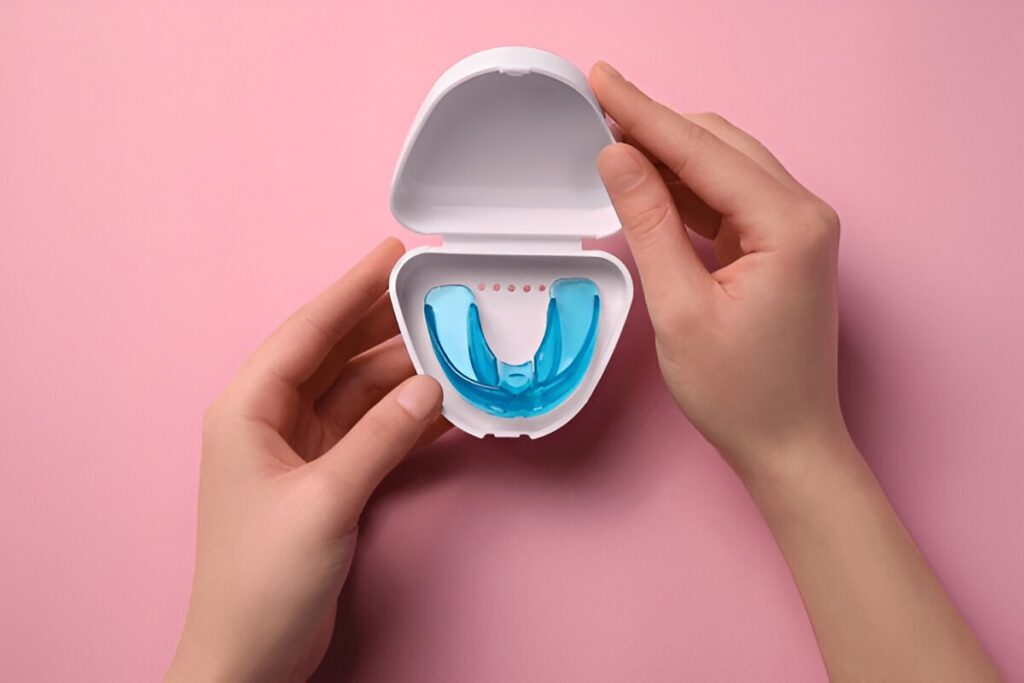
Dental night guards are protective devices worn over the teeth during sleep to prevent grinding and clenching. They act as a cushion, absorbing the force exerted by bruxism and reducing wear on your teeth.
Night guards offer several benefits, including:
-
- Protecting Teeth: They prevent tooth damage by providing a barrier between upper and lower teeth.
-
- Reducing Pain: They help alleviate jaw pain and headaches associated with bruxism.
-
- Improving Sleep Quality: By reducing discomfort, night guards can lead to better sleep.
Custom night guards are tailored to fit your mouth perfectly. A dentist takes an impression of your teeth to create a guard that provides the most comfort and effectiveness. While they may be more expensive, they offer superior fit and durability.
These night guards are available in drugstores and are semi-customizable. You soften them in hot water and then bite into them to shape them to your teeth. They are more affordable than custom guards but may not fit as precisely.
Stock night guards are pre-formed and ready to wear. They are the least expensive option but often the least comfortable and effective. They might feel bulky and can make breathing challenging during sleep.
When selecting a night guard, consider:
-
- Fit and Comfort: A good night guard should fit well and feel comfortable.
-
- Material: Look for materials that are durable and safe.
-
- Cost: While custom guards are pricier, they may provide better protection and comfort in the long run.
Before choosing a night guard, it’s wise to consult with your dentist. They can recommend the best type based on your specific needs and ensure the guard fits properly.
Proper maintenance is crucial for the longevity and effectiveness of your night guard. Here are some tips:
-
- Clean Regularly: Brush your night guard with a toothbrush and non-abrasive toothpaste after each use.
-
- Store Properly: Keep it in a ventilated case to prevent bacterial growth.
-
- Check for Wear: Regularly inspect your night guard for any signs of wear or damage and replace it as needed.
- Check for Wear: Regularly inspect your night guard for any signs of wear or damage and replace it as needed.
Night guards are not just for athletes or those with bruxism. They serve an essential function in protecting teeth from grinding and clenching, reducing pain, and improving sleep quality. Whether you opt for a custom night guard or a more affordable option, the key is to choose one that fits well and meets your needs. Always consult your dentist to ensure you’re using the best possible solution for your dental health.
By taking proactive steps and using a night guard, you can protect your teeth and enjoy better oral health for years to come.