
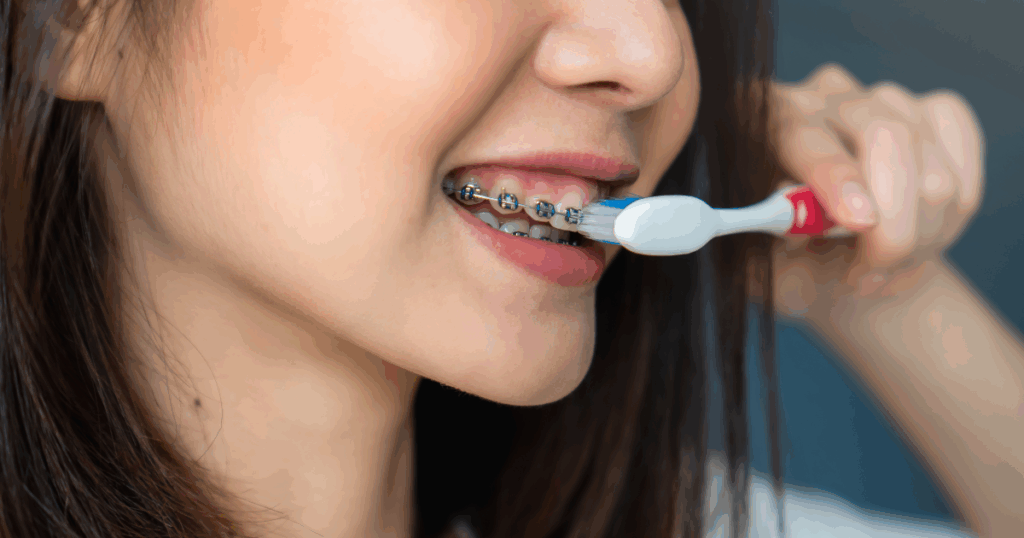
Braces are an incredible tool for straightening teeth and creating a smile you’ll be proud of, but they do change the way you take care of your mouth. Once brackets and wires are in place, brushing isn’t as simple as running a toothbrush across your teeth a couple of times a day. Food particles and plaque can easily get trapped in the small spaces around your braces, and if not cleaned properly, this can lead to cavities, gum inflammation, or permanent white spots on your teeth. That’s why brushing with braces requires a bit more time, patience, and the right technique.
When you have braces, brushing after every meal becomes especially important. The goal is not just to keep your teeth clean, but also to protect your gums and make sure your orthodontic treatment goes smoothly. Learning how to angle your brush, what tools to use, and which mistakes to avoid will make the process easier and more effective. With the right approach, you can keep your mouth healthy throughout your orthodontic journey and look forward to a bright, confident smile when the braces finally come off.
Why Good Oral Hygiene Matters When You Have Braces
When you’re wearing braces, keeping your teeth clean isn’t optional it’s essential. The metal parts can trap bits of food and plaque, which breed bacteria and can lead to white spots, decay, inflamed gums, and even slow down your treatment. A clean mouth helps prevent these issues and makes sure your braces do their job smoothly.
Dentists recommend brushing after every meal not just twice a day because braces tend to hold onto debris longer.
Common Mistakes to Avoid While Brushing with Braces
Let’s break down the most common brushing slip-ups and how to fix them:
1. Skipping that 45-Degree Angle
Brushing straight on misses plaque at the gum line and around brackets. Tilt your brush 45° toward your gums, and make small circular strokes, brushing above and below each bracket to reach every surface.
2. Racing Through the Routine
With braces, take extra time—at least two minutes. Focus on the tiny spaces around the wires and back teeth, not just the front surfaces.
3. Using a Too-Stiff Brush
Hard bristles can scratch brackets or hurt gums. Choose a soft-bristled brush. Replace it every 3–4 months or as soon as you see the bristles wear out.
4. Forgetting to Floss
You might be tempted to skip flossing, but you need it more than ever. Use a floss threader or interdental brush to clean beneath wires and between teeth.
Water flossers can also be a game-changer, especially for braces, helping rinse away plaque and debris gently.
How to Brush with Braces — Quick Steps
- Rinse your mouth after eating if you can’t brush immediately.
- Tilt the toothbrush 45° and gently clean above each bracket.
- Then angle down and clean below the bracket.
- Brush the chewing and inner surfaces.
- Finish with flossing—use a threader or interdental brush.
- Rinse with water or a fluoride mouthwash to add extra protection.
Brushing with braces may seem challenging at first, but it quickly becomes second nature with the right technique and tools. Taking those extra few minutes each day to clean thoroughly will not only protect your teeth and gums but also ensure your braces treatment delivers the best possible results. Remember, braces are temporary, but your smile is for life. With consistent care, you’ll avoid unnecessary dental problems and enjoy a smooth transition to beautifully aligned teeth. And if you need guidance, the team at Gravity Dental Poly Clinic is always here to support you on your journey to a healthier smile.